
Letter from the Editors
Mark Hsiang-Yu Feng PhD, ethnomusicologyThe University of California, Davishyfeng@ucdavis.eduGarrett GroesbeckPhD Candidate, ethnomusicologyWesleyan Universityggroesbeck@wesleyan.edu
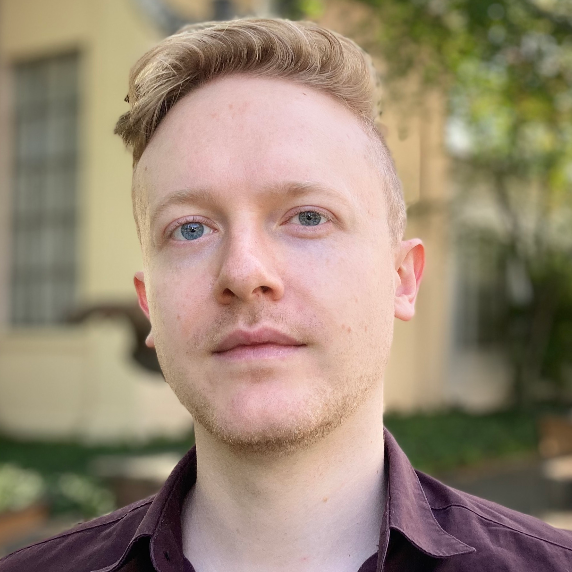
For this issue of Rising Voices we have chosen the topic of “Labor, Value, and the Job Market.” An alternative title could have perhaps been “Confronting Graduate Student Magical Thinking,” a condition from which I (Garrett) have long suffered, and which at times I fear may be terminal.
There is no point in mincing words: the majority of current doctoral student members of the Society for Ethnomusicology will likely not find work in the tenure-track jobs we are being trained for.1 Though post-PhD employment has long been a major concern for fine arts and humanities scholars, conversations about job searches still often seem to happen at the periphery of academic training; there remains, amazingly, a sense of shame and stigma around failing to land a tenure-track position. While a cottage industry has sprung up to help PhD-holders tackle the problem of “transferable skills,” I believe that our vocabulary for describing the emotional toll of an extended or failed tenure-track job search remains underdeveloped. This is in spite of the fact that ethnomusicology has always been a border-defying field filled with creative, interdisciplinary, multi-talented thinkers; additionally, our discipline has no shortage of generous, thoughtful mentors working in what are variously described as “public-facing,” “applied,” or “alt-ac” ethnomusicology positions.
In spite of our diverse pathways to the field, once on the academic trajectory, students and advisors alike often feel powerless, trapped in the academic arms race that has resulted in the overproduction of doctoral degrees relative to the number of jobs. To those who hope that this situation will change dramatically in the next few years, I refer you to the 2016 issue of SEM Student News (the previous incarnation of Rising Voices) themed “Finding Paths on the Job Market.” Unfortunately, things have only become more precarious in the intervening decade. Relatedly, many of the concerns raised in an open letter to the American Musicological Society in 2017 remain equally relevant, if not more urgent, today.
Under the current training/employment bottleneck euphemistically referred to as “the job market,” effort is almost completely decoupled from outcome: dozens to hundreds of hours spent writing application materials may not even result in a single job interview. Advisors are buried under endless requests for letters of recommendation, most of which, I suspect, are never even read. Rather than the horror such a Kafkaesque state of affairs should elicit, students are met with grim acknowledgements that “you just have to keep trying” and “that’s how it is these days.” I share these thoughts in an attempt to rouse myself, and others, from any sense that we should see this as normal.
It is difficult to square my experience on the job market with the sense of community that I feel among graduate students in ethnomusicology. Even under the cutthroat competitiveness of “late” capitalism (how long can something be late for?), one thing that lifts my spirits is the solidarity that graduate students in our field demonstrate toward one another, even when facing remarkably destabilizing circumstances. It has been my pleasure to work with the team at Rising Voices, and it is my hope that this issue, by once again placing the challenges of the job market front-and-center, will help to further spark conversations about how we can care for one another.
This issue features three graduate student articles. Each of the authors draw from Pierre Bourdieu’s work on forms of capital (embodied vs. cultural; pure vs. institutionalized): Ali Hassan analyzes the sale of Pittsburgh-based radio station WDUQ, highlighting the ways in which the station accrued realized financial value from volunteer labor in its long-running program Music From India while offering no archival or documentary care toward the show’s listenership. Wesley Higino details the challenges of building institutional continuity in peripheral geographic regions with limited research infrastructure, pointing to the displacement of local knowledge holders in stable faculty positions by those who cultivated their CVs elsewhere. Alec Norkey uses the concept of patronage to explore the relationship between corporate donors, nonprofits, and musicians in contemporary Los Angeles, shaped by the priorities of liberal multiculturalism. In addition to the student articles, this issue features a review by Calla Paleczny of Mariusz Kozak’s book Enacting Musical Time: The Bodily Experience of New Music; in it, Paleczny particularly highlights Kozak’s innovative formal approach, with implications for both listening and writing practice.
This issue also includes two Dear SEM contributions. Golriz Shayani draws readers’ attention to the fundamentally relational core of our field as a signpost for navigating the crises facing the academic knowledge-building project, specifically the challenges posed by generative AI. Chun Chia Tai draws from her work in the International Student Network as well as personal experience to sound the alarm about the situation faced by international students in the United States today. We are also pleased to share a version of the Rising Voices Roundtable held at the 2025 Society for Ethnomusicology conference in Atlanta, GA, U.S.A., on the topic of this issue, with contributions by Kabelo Chirwa, Mark Hsiang-Yu Feng, Garrett Groesbeck, Abigail C. Lindo, Marysol Quevedo, and Mark Lomanno, and with thanks to discussant Tomie Hahn.
As we conclude our time with Rising Voices, we are excited to turn over editorship to Timothy Yu and Katie Minyoung Cooke, both of whom have spent several years as associate editors. We look forward to seeing how the publication continues to develop under their capable leadership.
Garrett Groesbeck
Mark Hsiang-Yu Feng
Outgoing editors, Rising Voices in Ethnomusicology
REFERENCES
Quevedo, Marysol. 2025. “Demystifying, Reimagining, and Modeling Career Paths Within and Outside Music Academia.” American Music 43 (1-2): 26-31.
[1]Marysol Quevedo (2025, 29) cites data collected by Danielle Fosler-Lussier and Stacy M. Hartman indicating that “regarding the employment trends of 2008–2022 doctoral graduates in music studies … only 23.3% of individuals have ‘firm commitments of academic employment at graduation.’”