
Genuine Care: Artificial Intelligence and the Future of Academic Labor
Golriz Shayani An ethnomusicologist who is in between hooding and academic affiliationgolriz.shayani@utexas.edu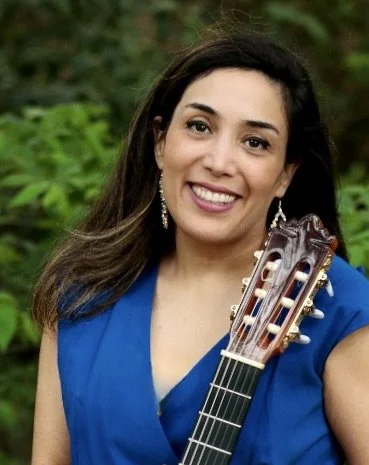
In Persian, when a person is bound by unfair circumstances—usually economic—s/he uses the phrase “my feathers and wings are tied” (par-o-bāl-am bas-te ast, پروبالم بسته است) to convey that there is nothing inherently wrong with the person to improve their living condition. Like a bird whose wings are meant for flying and reaching out to the highest points in the sky, one has the potential to succeed, but unjust conditions have bound their wings. This metaphor reflects the situation of current students and recent graduates like me who are facing a job market crisis in anglophone higher education. Our wings are tied at a critical transition point to the next stage of our careers. One example of such conditions is competition over limited postdoctoral and tenure-track positions each year, as the prompt for this issue of Rising Voices mentions. Other examples include grappling with the impacts of the COVID-19 pandemic on the job market and the global economy. Another issue is that most US institutions have been reluctant to support work visas for international employees (not to mention rigid visa restrictions for certain nationalities like my own, Iranian). Furthermore, the advancement of artificial intelligence (AI) technologies has impacted not only the job market but also teaching practices and our relationships with students. In this article, I examine the ways in which the increasing use of AI may challenge academic labor, particularly in relation to job seeking and student mentoring. I further argue that while AI may change academic labor and interactions, embodied and relational aspects of ethnographic fieldwork and musicking can help us to sustain and reinforce care and ethical responsibilities central to academic labor.
AI’s rapid development is transforming and reshaping traditional academic processes. As students and the public increasingly rely on AI, conventional sources of knowledge may lose credibility and influence. Juan Bermúdez insightfully argues that “the value given to facts and academic authority is becoming null and void,” as people use AI tools in excessive and “unreflective” ways (2025, 236). At the same time, academics must contend with AI tools such as ChatGPT and SUNO in areas including research, music creation, writing, and lecturing. Consider the labor involved in publishing an academic book; books require years of research and writing, but AI systems can now generate substantial drafts in a matter of days. Furthermore, teachers must adopt new approaches to designing assignments and grading student work. For instance, AI has complicated the evaluation of student papers because instructors must now learn how to identify AI-generated content. Though AI-detection software can identify such cases to a degree, this creates a loop in which AI is evaluating its own content. As I have been searching for academic positions, I have found myself questioning whether publications and research output— long regarded as key indicators of scholarly productivity—remain sufficient criteria for academic hiring. What will distinguish the human labor of teaching from AI tools in the production and transformation of knowledge?
Academic labor is not only intellectual, but also ethical and relational. In contrast to “par-o-bāl-am bas-te ast,” there is another Persian expression: “bāl-o-par dā-dan بال وپردادن,” which literally means “to give wings and feathers.” This phrase refers to mentors who genuinely care about their mentees’ success by providing them with resources and opportunities that would help them to grow and succeed. Mentors give students what they need so they can “rise” and “fly” on their own. It conveys the idea of empowering someone to reach their full potential. Educators must continue to provide this care, even as students increasingly rely on AI for educational support. Additionally, the embodied and relational aspects of ethnographic fieldwork and music-making remind us that human connections are essential components of research and education. As an ethnomusicologist, I recognize that the embodied knowledge and lived experiences of the communities we work with, along with our own fieldwork experiences, are vital forms of data that cannot be (re)produced by AI. Bermúdez also argues that AI cannot replace the relational aspect of our discipline or do “the labor of building relationships” for us (236). As such, while AI may assist with research and learning, relational ethics and care can help preserve values of our teaching labor.
In a digitalized and AI-driven world, how can we continue to practice care, patience, and honesty toward our colleagues, students, and research communities? Returning to the example of writing, some users have already shifted away from physically typing into platforms such as ChatGPT, relying instead on voice interaction. There are even emerging discussions about AI systems that may one day interpret users’ thoughts directly, potentially further reducing our use of tactile and auditory senses. If AI tools remove us from such sensory and bodily engagement, they may also diminish the ways in which we cultivate virtue through practice. As argued in Aristotle’s “practices of virtue,” ethical formation is cultivated and embodied through the repetition of bodily practices. As ethnomusicological studies have demonstrated, music is a communal, multi-sensory, and embodied practice (Eidsheim 2015; Gill 2017; Rahaim 2012). Therefore, musicking can counter how AI diminishes our (relational) use of the sensorium. Said differently, making music helps us to remain connected to our bodies and others’ feelings and senses in the age of AI. From my own research on music and ethics in diasporic Persian-speaking churches, I also understand that musicking is a “technology of self/[ves]” (Foucault 1997 [1954–1988]), which enables us to remain ethically responsible to our communities.
Although AI’s transformation of academia is inevitable, the forms of teaching that rely on care and ethical responsibility cannot be easily replicated by AI tools. In Persian poetry and literature, flying often symbolizes a purposeful effort to attain higher levels of ethical selfhood. Given this metaphor, the phrase “bāl-o-par dā-dan” conceptualizes that mentorship is not merely a means of facilitating success in the material world. While mentorship may include supporting students’ academic achievements and professional advancement, the term also conveys the mentor’s responsibility to help mentees cultivate inner formation and develop virtues. Thinking of John Blacking’s definition of music as “humanly organized sound” (2000 [1974], 10), I suggest that, if we want to preserve our humanness and teach students ethical values, we need to incorporate musical practices into classrooms more than ever. Educational institutions should also make an explicit commitment to an ethics of care, emphasizing mentorship and encouragement as essential components of academic labor. Lastly, I suggest further conversations about how we might incorporate an ethics of AI into ethnomusicology in ways that preserve the core values of academic labor.
REFERENCES
Blacking, John. 2000 [1974]. How Musical is Man. University of Washington Press.
Bermúdez, Juan. 2025. “Ethnomusicology, Artificial Intelligence, and the Intimate Work of Connection.” Ethnomusicology Forum 34 (2): 233–237. DOI:10.1080/17411912.2025.2560263.
Eidsheim, Nina Sun. Sensing Sound: Singing and Listening as Vibrational Practice. Duke University Press.
Foucault, Michel. 1997 [1954–1988]). “The Battle for Chastity.” In Ethics: Subjectivity and Truth, vol. 1 of Essential Works of Foucault, 1954–1984, edited by P. Rabinow. Translated by R. Hurley et al., 185–196. New Press.
Gill, Denise. 2017. Melancholic Modalities: Affect, Islam, and Turkish Classical Musicians. New York, NY: Oxford University Press.
Rahaim, Matthew. 2012. Musicking Bodies: Gesture and Voice in Hindustani Music.
Middletown, Conn: Wesleyan University.