
Rising Voices Roundtable from SEM 2025: Labor and the Job Market
PROMPT FOR ROUNDTABLE PARTICIPANTS
In recent years, Rising Voices has seen an increasing number of submissions from graduate student authors on topics relating to labor, music, and markets. Such conversations are happening parallel to the job market crisis in anglophone higher education, in which a vast pool of applicants compete for a handful of tenure-track positions each year. Given the significance of these topics to both students in ethnomusicology and to many of our research collaborators, the editors at Rising Voices have convened a round table of scholars representing diverse research areas and differing stages of their careers. Though questions surrounding public and applied ethnomusicology have produced a wealth of dialogue within our field, graduate students, particularly international students, face a particular set of challenges on the job market. Inspired by historian Erin Bartram’s 2018 essay “The Sublimated Grief of the Left Behind,” we ask our participants: how do you understand the role of your labor in relation to collaborators, colleagues, and institutions? How can we retain community, support, and peer review with friends who ultimately leave academia? What has driven your motivations to stay in higher education? How do we define unpaid labor, and what are the reasons for participating (or not) in it? We are particularly interested in ways that ethnomusicology students who ultimately leave higher education might remain connected to our Society and contribute to networks of richly informed, mutually supportive, and academically engaged musicians in the broader world.
Presenters’ remarks from the conference are presented here in alphabetical order by surname, with minor modifications for printed format.
With thanks to discussant Tomie Hahn, Professor Emeritus, Rensselaer Polytechnic Institute
ROUNDTABLE PARTICIPANTS
Presenters (alphabetical order by surname — see below):
Kabelo Chirwa, University of Cincinnati (top left)
Mark Hsiang-Yu Feng, University of California, Davis (top middle)
Garrett Groesbeck, Wesleyan University, organizer (top right)
Abigail C. Lindo, The Ohio State University (bottom left)
Mark Lomanno, University of Miami (bottom middle)
Marysol Quevedo, University of Miami (bottom right)
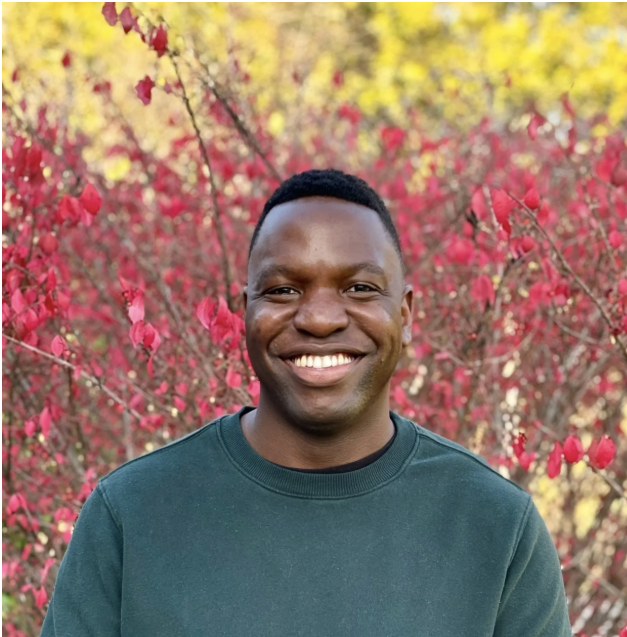


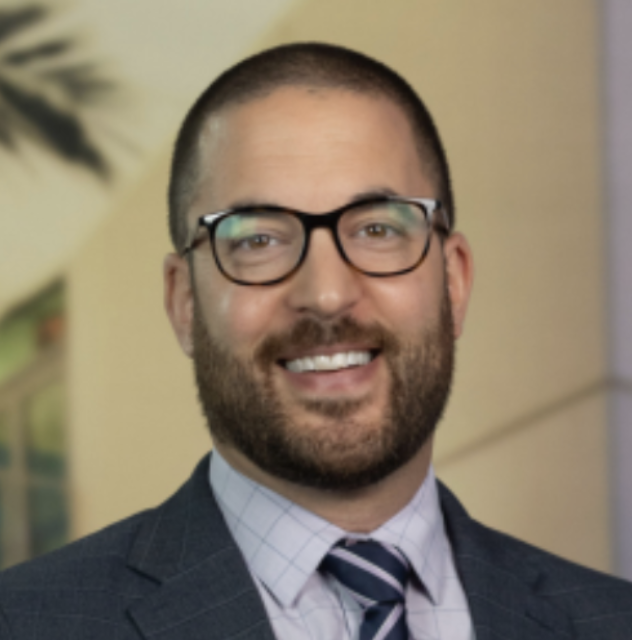
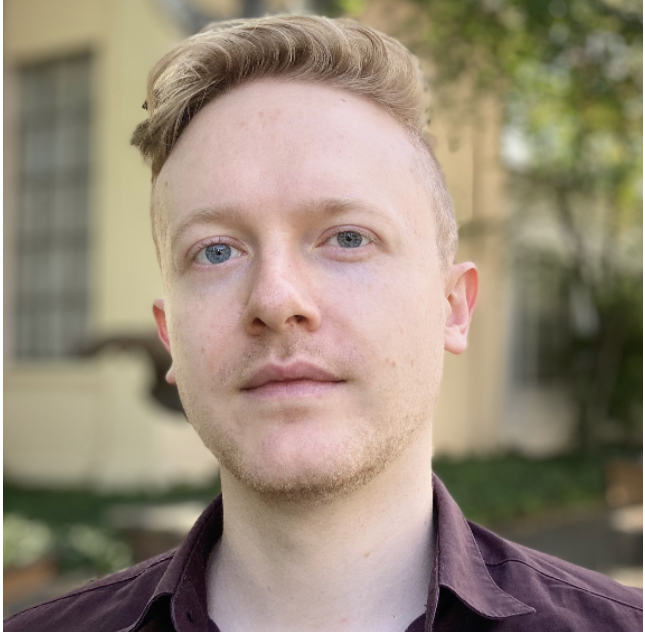
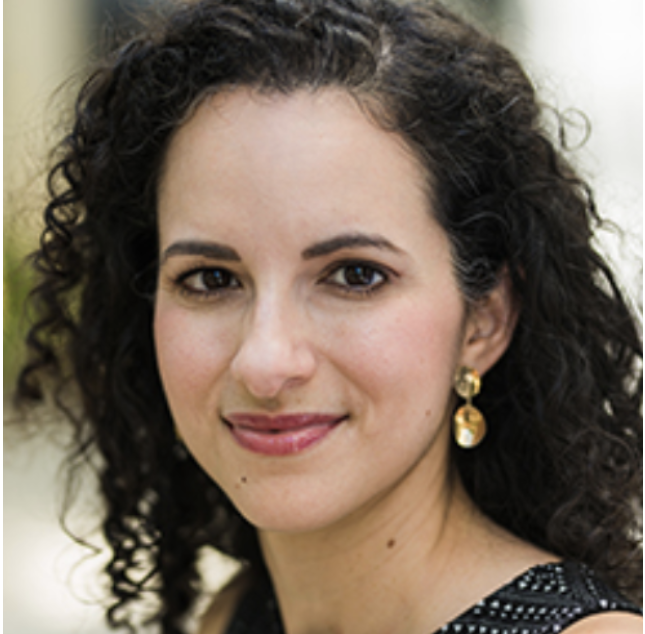
Kabelo Chirwa
PhD Candidate, Musicology
University of Cincinnati College-Conservatory of Music
I thought about interviewing my father as I prepared my remarks for today. In a moment, you’ll see why that would have been appropriate preparation and, particularly for this crowd, fascinating discourse. However, I have to push myself to accept that this topic that we are discussing is so personal. Though it is dreadful to invite an audience into my own history and to admit to you and myself, what I make of it. This conversation concerning our labor, our thoughts, our ideas, our “passions”, our fixations, our histories, and the efforts that transform such projects into legacy and (hopefully) financial needs/comforts is, often, more intertwined with my being than I tend to feel comfortable acknowledging.
But, I will still talk a bit about my father, even though I chose not to interview him. This way I can spend more time reflecting on how being his son and experiencing academia as his son has perhaps shaped my current relationship to academic institutions and academic communities. To offer a slightly more vivid picture of who my father is as a scholar and teacher: he is a tenured professor at Bluegrass Community and Technical College. He is also the coordinator for the Computer & Information Technology and Cybersecurity Programs. He has many grants and certifications that I do not understand. And in the same year that I received my Fulbright grant to research popular music in Nigeria, he was named a Fulbright Scholar and did some work/teaching on Machine Learning at Tshwane University of Technology in Pretoria, South Africa.
In my father’s winding path through academia, among these accolades, was the pursuit of a PhD. One of the conversations that came up at some point in my life was regarding his PhD pursuit at University of Kentucky. He mentioned to me that, at the time when he was a UK student, one of the struggles that he encountered was in the treatment and judgement of students who were not solely focused on research and completing their degree. That is, as a student who had a family and, therefore, also worked to provide an income for his family he felt greater scrutiny in his work.
Again, my father has enjoyed a career as part of an academic institution and within academic communities. However, when I started thinking about my conversations with the Rising Voices folks and I sat with the abstract that proposed this panel, I was mostly drawn to the ways that we were called on to examine community, collaboration, and institution. And as I think about community, I consider the professional communities that we may be part of (i.e., Society for Ethnomusicology) and the personal communities (i.e., family, social organizations, or local neighborhood projects).
I began considering these questions in relation to my father’s academic career and the similarities and differences that it bears to my own path. I began thinking about why I have approached the PhD and the specific career path at the center of that educational decision in the way that I’ve approached it. Mostly, I thought about how, in the 2022/2023 academic year, a colleague and I had recently concluded coursework and began working on our dissertation proposals. During this year we decided to set up weekly writing sessions at a local Cincinnati coffee spot. Sometimes, at these meetings, a (somewhat joking) admission would be verbalized by either one of us (me or my colleague) that: if we were lucky enough to earn a decent non-academic job (that is hopefully music related) and is offered to us before we finish our PhDs, we will be OK abandoning the final task of the degree (i.e., finishing our dissertations). To be clear, I think my pride and the parts of my psyche that can become obsessive may not let me quit that easily.
I believe part of what inspired this admission (for me) was being a child, and witnessing how easily academia can quit you. Or, at least, decide that you are worthy of some aspects of the field while excluding you from others. This feeling is then compounded with the increasing centrality of neoliberalism in the academy—prioritizing profits over personnel and accelerating the enshittification of education systems (I purposefully borrow the tech industry term for the rapid deterioration in the quality of a product).
I will say, in my experience “professional community” has looked much different than when my father was a student: When I told my colleagues and professors that I was going to become a father, I was met with a great deal of enthusiasm. I expect it was a much warmer and enthusiastic discussion than those that my father had about his family. When I revealed to colleagues that I would be bringing my family along on my field work trip I saw a great deal of enthusiasm and only the smallest hint of worry, but that was for other reason.
Regarding “the institution”—this vague entity that I’ve been referring to that we all tend to serve in some capacity—I’m not sure what can be done about it. In fact, I’m rarely optimistic about our fate in this larger force. However, I do feel the bonds of community becoming continually stronger. The eagerness to connect and to encourage. I’ve found in my experience that one need only reach out and ask. When I first struggled to find some solid footing for my family to adjust to life in Lagos. When I felt isolated in my dissertation writing.
I still have many questions about a realistic path forward in the pursuit of this “career”. Because, we are still many scholars that are “competing” for very few jobs. However, I am constantly thinking about abolitionist scholarship that teaches, it is the collective that begins to imagine new systems and find ways to construct inconceivable futures. So, in that way I’m hopeful that as we continue to be a collective and challenge the forces that work to produce more individualistic attitudes, we can rethink “the institution” and, as part of that process, recenter academic and non-academic communities that we know are valuable but have still had to fight have the value recognized.
“In the end, a practice of abolitionist care underscores that our fates are intertwined and our liberation is interconnected.” (Kaba 2021, 111)
REFERENCES
Kaba, Mariame. 2021. We Do This ‘Til We Free Us: Abolitionist Organizing and Transforming Justice, edited by Tamara K. Nopper. Haymarket Books.
————————————————————————————————————————————————————————————————————————————————
Mark Hsiang-Yu Feng
PhD, ethnomusicology
The University of California, Davis
Ethnomusicology in the Current Time of Crisis: Cultivating Solidarity
As we all know, the job market does not look any nicer this year, and perhaps we can describe the current situation as a crisis for ethnomusicology—and, more broadly, for higher education in the United States. By crisis, I mean the collapse of the basic infrastructures that sustain our discipline: funding, hiring, fieldwork, admissions, and teaching.
This situation is not akin to what Tim Rice discussed in his article, “Ethnomusicology in times of trouble” about a decade ago. He suggested that “It is hard to imagine working in unstable and dangerous environments that lack the infrastructure to support safe research conditions and that harbour distracted populations unable to engage productively with music researchers.” In contrast, I find it is uncommon for me, my colleagues, and my students to have a stable and predictable environment for research, teaching, and learning in just a decade.
As an international student and a person of color in the US, I often find myself navigating my visa status alone, which has an impact on the opportunities for funding, fieldwork, and professional career development. Navigating all this by myself is a form of unpaid labor, as the government announces new initiatives seemingly for their own sake of exclusion. I’ve also heard a faculty member complain that supporting international students is a burden or a form of unpaid labor to them.
When the essential components needed for studying ethnomusicology gradually fade away under the current trend of anti-globalization, what kind of future can ethnomusicology have? How can we proceed our commitment to amplifying the unheard voices of people who are experiencing structural inequality?What can I do for my colleagues and students whoare as scared as I am?Reflecting on these questions, I’d like to share a moment in my fieldwork with you, and hopefully, what inspires and moves me can also bring you hope.
In early 2024, in Taipei, Taiwan, I was engaging with a small group of Indonesian migrant workers who performed hardcore punk to express their resistance against Taiwanese racialization. The musicians of Southern Riot traveled from southern Taiwan to attend and perform for the Migrant Worker Rally organized by the Taiwan International Workers Association in front of the office of the Ministry of Labor. Slightly before the performance began, my interlocutor shared with me the principle of Gotong Royong, which allows people to work, solve problems, and endure struggles together. Such collectivismguides the Indonesian traditional musical practices, and it is also in popular music, such as hardcore punk, as they perform in this protest.
The musical performance by Southern Riot was made for the diasporic community of Indonesians, Filipinos, Vietnamese, Malaysians, and Thais who are migrant workers in East Asian countries, including South Korea, Japan, and Taiwan. And specifically, it was dedicated to those who passed away due to Taiwan’s police brutality, exploitative labor practices, exclusive immigration policy, and other forms of violence. What motivated me was the practice of Gotong Royong in addressing collective hardship and struggles, and a sense of urgency that I have to carry out my research and point out Taiwan’s racism against Southeast Asians. As many Taiwanese are unaware of racial issues, maybe my research has the potential to prevent tragedies from happening.
Despite the current struggles we are having, there is still work to be done, and things to be said, messages to be conveyed, and knowledge to be passed down. This is why I choose to stay in higher ed. Establishing a sense of collectivism and solidarity through actions is perhaps what ethnomusicology needs the most at this moment of crisis.
So finally, I’d like to invite all of you to reflect on those beautiful moments from the fieldwork and view them as inspiration for solidarity. Please reach out to the colleagues, peers, and students around you and ask them if they are doing well, if they seem to have a hard time. Please don’t take supporting international students as an additional burden, but please also don’t take the unpaid labor for granted.
————————————————————————————————————————————————————————————————————————————————
Garrett Groesbeck
PhD Candidate, ethnomusicology
Wesleyan University
“Is Peer Review Free Labor?” Imagining a Utopian Ethnomusicology
The prompt for this roundtable was inspired by Erin Bartram’s beautiful and heartbreaking 2018 essay “The Sublimated Grief of the Left Behind.” In it, Bartram describes the experience of giving up on applying for tenure-track positions in history after three years on the market. She wonders how she could continue to be involved in peer review and academic publishing as an independent scholar, and whether she would even want to. Most poignantly, she asks “What would happen if we acknowledged the losses our discipline suffers every year? What would happen if we actually grieved for those losses?” I hope to take up some of these questions as a way of imagining a utopian ethnomusicology: how can we grapple with the enormous mental toll of the annual attrition in the academic ethnomusicology job search? How can we avoid the kind of well-intentioned but often hurtful comments Bartram describes: “‘But your work is so valuable,’ people say. ‘It would be a shame not to find a way to publish it.’ Valuable to whom? To whom would the value of my labor accrue? And not to be too petty, but if it were so valuable, then why wouldn’t anyone pay me a stable living wage to do it?” (Bartram 2018)
Reading more of Bartram’s work, I was struck by her 2022 essay “Does the Field Deserve Our Work?” Like the title, the first sentence is provocative: “My first reaction upon receiving the invitation to participate in this forum was, ‘What is the compensation for this writing?’” (Bartram 2022, 557) In both pieces, Bartram addresses the economic realities of conducting research and publishing without the support of an academic institution. While I find her initial writing on grief inspiring, and I wholeheartedly agree with her call not to treat the work of independent scholars as less-than, I am more ambivalent about the implication that scholarly publishing should involve payment to authors. While conversations about “free labor” have reanimated feminist inquiry into the underappreciated work many women do every day, I worry that conceiving of scholarly work such as writing and peer review purely in terms of financial value risks fully absorbing the logics of neoliberal capitalism into every facet of our lives. Put another way, people whose material needs are met should have the time, energy, and brainpower to engage in research that may not be profitable this quarter, or even in the next fiscal year, or ever, purely for knowledge’s sake. True, this idea has often been harnessed to wish away the poverty that hovers at the dark edges of the “life of the mind,” but neither do I believe that we should accept a totalizing vision of finance which mediates all human interactions, nor the creep of the profit motive into scholarly work that is meant to be free from funding bias. What if rather than paying authors for writing or peer review, more jobs outside the academy looked like tenure, with service “baked in” to the salary?
There are systemic reasons why having conversations about labor and value remain difficult, however. On the part of students such as myself, I believe that the developing psychological field of System Justification Theory (Jost 2020) is particularly informative. Scholars working in System Justification theory note that, paradoxically, accepting the status quo can have the greatest palliative effects for some of society’s most vulnerable individuals. Believing that the academic marketplace of ideas rewards the most dedicated, thoughtful, diligent scholars insulates us against the harsh realities of graduate studies: that many of our friends, colleagues, and classmates will probably not get permanent jobs in higher education, often due to factors completely unrelated to the quality of their research. On the part of advisors, there are interlocking reasons to avoid difficult conversations about the job market: faculty may worry that they will scare off students; that their departments will lose some of the funding they’ve managed to painfully scrape together for research; that they do not know how to prepare students for any job other than an academic one. Survivor bias almost certainly also plays a role: I have heard from faculty members that they themselves managed to get their positions in a difficult job market. However, if advisors really care about the well-being of their students, which I believe the vast majority in our field do, they must push past this discomfort to have clear-eyed and honest conversations about the job market and encourage students to have contingency plans.
Tes Slominski (2025), in the most recent issue of our publication, has insightfully argued for “doing ethnomusicology queerly”: “In an era when only a small fraction of graduate students get faculty jobs—and even fewer remain in them—narrow conceptions of ‘the institution of academia’ will only get us so far. That confined and confining institution has always needed those who work outside its central roles of student/faculty.” Although important resources exist, such as Margaret Sarkissian and Ted Solís’ (2019) broad-ranging and insightful volume Living Ethnomusicology, we could do more as a field to help students envision a “non-institutional ethnomusicology” in the twenty-first century. My utopian vision of ethnomusicology makes an ever more impossible ask: I envision a world in which non-academic jobs might look more like tenured positions, one in which not only faculty but anyone with the expertise to provide peer review will have the free time and journal access to do so, whether they are professors, performers, or plumbers. This may sound impossible now, but would it have felt that way in 1960s America, or at the People’s Universities of Yugoslavia? I opened the undergraduate seminar course I am teaching this fall with Audre Lorde’s (2007, 38-39) powerful essay “Poetry is Not a Luxury,” and I’d like to close with a quote: “we must constantly encourage ourselves and each other to attempt the heretical actions our dreams imply and some of our old ideas disparage … For within structures defined by profit, by linear power, by institutional dehumanization, our feelings were not meant to survive.”
REFERENCES
Bartram, Erin. 2022. "Does the Field Deserve Our Work?" Journal of the Early Republic 42 (4): 557-560.
_____. 2018. “The Sublimated Grief of the Left Behind.” https://erinbartram.com/uncategorized/the-sublimated-grief-of-the-left-behind/
Jost, John T. 2020. A Theory of System Justification. Harvard University Press.
Lorde, Audre. 2007 [1977]. “Poetry is not a Luxury.” In Sister Outsider: Essays and Speeches. The Crossing Press.
Sarkissian, Margaret Lynne, and Ted Solís. 2019. Living Ethnomusicology: Paths and Practices. University of Illinois Press.
Slominski, Tes. 2025. “Dear SEM: Rainbow Lifejackets on the Ship of State.” Rising Voices in Ethnomusicology 21(1): n.p. https://risingvoicesjournal.com/211-dear-sem
Bartram, Erin. 2022. "Does the Field Deserve Our Work?" Journal of the Early Republic 42 (4): 557-560.
_____. 2018. “The Sublimated Grief of the Left Behind.” https://erinbartram.com/uncategorized/the-sublimated-grief-of-the-left-behind/
Jost, John T. 2020. A Theory of System Justification. Harvard University Press.
Lorde, Audre. 2007 [1977]. “Poetry is not a Luxury.” In Sister Outsider: Essays and Speeches. The Crossing Press.
Sarkissian, Margaret Lynne, Ted Solís, Bruno Nettl, and Mark Slobin. 2019. Living Ethnomusicology: Paths and Practices. University of Illinois Press.
Slomiski, Tes. 2025. “Dear SEM: Rainbow Lifejackets on the Ship of State.” Rising Voices in Ethnomusicology 21(1): n.p. https://risingvoicesjournal.com/211-dear-sem
————————————————————————————————————————————————————————————————————————————————
Abigail Lindo
Lecturer/Assistant Professor
University College Dublin
Orchestrating Subversive Networks
Higher education in the United States is facing a sociopolitical reckoning. I am occupied with it from afar and consider how we, as a community of scholars and individuals existing within different networks of interest and knowledge can serve those who are in more vulnerable or precarious situations. Considering Erin Bartram’s essay as an inspiration for this roundtable, I want to acknowledge that I speak from a place of privilege as I have a tenure-track position: this is what we are often taught to aspire for. In truth, I am just thankful to have a job that allows me to pay my bills. That is what everyone desires: to have their needs met. One of those needs is connection.
We often view the institution as a protector, something that shapes our value. The question of how we retain community and support for collaborators who leave academia, who do not get jobs or who seek positions outside of academia—a question posed as part of this roundtable, assumes that community is something everyone values or cultivates, especially as something beyond serving the immediate needs of getting a position or securing a fruitful opportunity. The question also reveals the insularity understood within academic fields and networks, as we become siloed by our work and the constant drive to get more job security or wealth.
I am not directly saying that late-stage capitalism permeates academia, perpetuating a plantation logic that begs us to actively participate in our own consumption to feed institutions that will readily replace, forget, and/or despise us despite our publications, service, or accolades. But I do want to ask what networks do. How and why do we foster networks and connections? What does an ethics of care look like in and beyond ethnomusicology, especially in a time of such uncertainty? And what kind of wisdom can performance studies and Black feminist teaching impart as we navigate these questions?
I want to briefly acknowledge two texts that are presently serving as motivation. First, Insubordinate Spaces: Improvisation and Accompaniment for Social Justice (2019) by Barbara Tomlinson and George Lipsitz, a book introduced to me by Payam Yusefi when I had the pleasure of observing him and Mark Lomanno present on their collaborative research at the Center for Arts, Migration, and Entrepreneurship (CAME) Innovation Summit at University of Florida in 2025. Chapter two begins,
“Inside spaces structured in dominance, in a world suffused with avarice, anger, inequality, and injustice, it is not easy to live honorably and ethically, to sustain the hope of building affirmative and dignified relations with others, and to reckon honestly with the ways in which the global economy unevenly links together the fates of very differently situated people” (23).
As the authors elaborate on the ways in which accompaniment is a way of being that necessitates a collaborative, rather than competitive approach, they also position accompaniment as a democratic and liberatory practice, stating “[a]cts of accompaniment can generate creative alternatives to the limitations of the current historical conjuncture. They can help author and authorize a new social warrant grounded in preferential options for the least powerful, in a politics of respect, friendliness, and humility” (32). “Accompaniment in insubordinate spaces can help transcend the pervasive segregation of society” (33).
We should aim to foster this spirit of accompaniment in all our connections: collaborative, rather than competitive or exploitative. Those working in and through institutions of employment are afforded greater opportunities to share ideas and resources. Embrace this reality as a privilege and pleasure. It reflects an ongoing labor outside of your institutional identity enabling you to participate in orchestrating diverse ways of being and connections that are mutually beneficial beyond any singular moment of gain. With the aim of “shifting the atmosphere” (language signaling my Pentecostal church upbringing) and change spaces with our ways of being, how can we show care and support to those around us at different points in their careers?
The second reading is from Yearning (2015) by bell hooks. I had the pleasure of meeting and spending time with her when I was a student at New College of Florida. In my Black feminist and womanist infancy, I did not know her as a cultural theorist, as a foremother and powerhouse social critic, as an impeccable educator and scholar of the human condition encouraging everyone to be a feminist. I knew her as a presence, as a warmth: a short woman, with a spotted, round, smiling face and a bold voice that guests were eager to hear when I helped to prepare for her talks at the Sudakoff Center or another venue on the campus. hooks has since joined the ancestors and New College is no longer a bastion of academic rigor and intellectual freedom (as it once was), but her words still ring true.
hooks’ homeplace is something I continuously return to. Aside from being something I seek to cultivate, it is a thing I personally desire. She describes it as a site of resistance, a space Black women intentionally constructed to provide safety to heal from the wounds of racist domination. Despite sexism originally tasking them with the labor of caring for others in the United States since enslavement, hooks celebrates the transformation of this conventional role expanded to “include caring for one another, for children, for black men, in ways that elevated our spirits, that kept us from despair, that taught some of us to be revolutionaries able to struggle for freedom” (44). It was an incubation space in this sense. hooks remembers her mother’s and grandmother’s labors to produce homeplace, transcending their tiredness to provide spaces of healing, self-recovery, and renewal.
With this reflection, I ask what is gained from promoting an ethos of homeplace in the ways we converse, correspond, make space for, or otherwise interact with colleagues at different points in their journey of life? I end with this question, rather than with an answer, because there is not a singular one to any of the questions posed with the development of this roundtable. Care is labor, and whether we are approaching Tomlinson and Lipshitz’s accompaniment as an inclusive, liberatory practice, or attempting to cultivate homeplace for those who surround us, we can better navigate career transitions and our general moment of precarity together, centering the dignity and humanity of our colleagues—whether they are our juniors, our superiors or elders, gainfully employed, looking for a position, existing outside of academia, or anything in between.
Our labor, an ongoing entanglement of ideas and resulting publications, events, media items, and talks (to name a few manifestations), and the evolving job market, do not dictate how we approach the practice of orchestrating subversive networks of care that extend beyond our positions and further demonstrate our connections as individuals of shared aims and interests. We document, explore, and transform the world around us but our labor is not our identity or worth, and within and outside of our field, we should pride ourselves in sharing knowledge, maintaining understanding, slighting bias, and decolonizing our own perceptions of the significance we are taught to wield as a form of power. I urge you to employ an ethics of care, to aid in orchestrating subversive networks not as a performative gesture, but as a timely and necessary one.
REFERENCES
Tomlinson, Barbara, and George Lipshitz. 2019. Insubordinate Spaces: Improvisation and Accompaniment for Social Justice. Temple University Press.
hooks, bell. 2015. Yearning: Race, Gender, and Cultural Politics. Second Edition.Routledge.
————————————————————————————————————————————————————————————————————————————————
Mark Lomanno
Assistant Professor
University of Miami
So, as I was thinking about how I might be able to contribute to the conversation—in the improvised manner that Tomie requested of me—I think I might act as a “grizzled veteran of the job market.” So just a little bit of biography: I got into academia as a jazz musician. I was a jazz musician first; so the idea of hustling for work—of holding down a few gigs while always looking for others—was kind of the way that I had always worked. As a jazz musician, once I had gotten a master's degree, there wasn't a clear path for me at the doctoral level; and what led me to ethnomusicology was a short article by Gage Averill in which he talked about the value of community work and community outreach in ethnomusicology. That's why I decided to pursue that Ph.D. program. Working in community had always been a guiding principle for me.
I have never not applied for a job when I didn't have other people to take care of; so subsistence is something that was a primary motivator for me. I earned my PhD in 2012, and I was hired in my first tenure-track position in 2019. At that point I counted up all of the job applications that I had filed, starting, actually, the year before I finished my degree: it was over 300. I have been on dozens of Zoom and phone interviews. When I started in the job market, applications weren’t via online submission: I would go to the post office with stacks of manila folders to mail out applications. I've been to quite a few campus interviews -- at community colleges, R2s, R1s, small liberal arts colleges, religious, non-religious. I've served in research positions, teaching positions, hybrid performance and teaching positions. I have been the only ethnomusicologist on faculty. I've been the only jazz position on faculty. In the position that I'm in now at Frost, there are five or six departments for what I was doing by myself in my last position. I have taught two courses in a semester. And I have taught six courses in a semester, plus private students.
So, in terms of the job market, I have quite a lot of experience. One of the things that I think is helpful (that hasn’t already been said) – and this is hard when you have other people to take care of and you don't know how you're going to pay your bills – is, for however long you choose to go down this path, realizing that there's something to be learned from every encounter. For someone such as me, who decided to make a change from a freelance performance career to academic work as a means of supporting a family, it was hard sometimes to be able to look at a failed job search as a learning opportunity, because I still didn't know how I was going to feed my kids. And now that I'm in a position of stability – so, I was four years into a tenure track position at a small liberal arts school before moving to Miami, which is in R1, a few years ago; I just started my third year there – reflecting on why I stuck with it through all the applications and job precarity, it goes back to that article by Gage Averill and the desire to work in community. I think a commitment to the communities that I was already a part of, and the communities that I still hope to build. As someone who decided to go into ethnomusicology, one of my primary goals has always been to work in community wherever I landed. I think I got that from coming up as a jazz musician: the idea that musical communities thrive when we're all invested together. And again, from my position of privilege now, this may seem like looking back with rose-colored glasses, but I'll just close with this one anecdote. And I honestly think that looking back, it's the best teaching I think I've done to date:
During the 2016 election season I was a visiting assistant professor at Northeastern in Boston. The day after the election everyone was reeling from the results. I remember the anti-immigrant and xenophobic rhetoric that had been happening in the lead up to the election, and thinking about how unprepared I was to deal with that in the classroom. I was really fortunate to have a mentor, Leonard Brown, who had been active in Boston during the Civil Rights Movement; and we had already spent a lot of time talking to one another about the importance of teaching and the role that teachers can play; and then the election happened the way that it did. So my pedagogical response was to design a course in ethnographic methods, an introduction to ethnomusicology about the history of immigration in Boston. My family immigrated from Italy to Boston in the 1910s. And we had class on the T – Sorry, that's the subway in Boston. The students and I would have an introductory conversation en route to one of any number of community centers or performance venues, where we would meet with folks. And folks from the community would also come into our classrooms. It was then when I really started to think again about that article by Gage Averill: what do I really want these students to know? and how can I break down the walls of the institution to bring the community in? And to get the students out? It was such a positive experience for everyone. And, like I said, that wasn't from a position of tenure – I'm still not tenured – I was a visiting professor at the time, very much on the job market; and it was such a rewarding experience for me as a teacher. I learned so much from my students and from the community members.
So to bring it back to the beginning of the panel discussion and this idea of “what is the promise of ethnomusicology?”, I think, as we consider the different ways in which we can use our labor, and for whom, and its value toward realizing the promise of what ethnomusicology could be, that, as ethnomusicologists, because we're so accustomed to working in community, we are actually better prepared to do this kind of responsive work [as I did in the aftermath of the 2016 election]. I forget who mentioned it just now, but someone said “You just need to ask [for assistance],” so for those of you who feel like you need to ask, please come and ask. We “grizzled veterans” are happy to help. This is something that I've always known, practiced, and benefited from as a jazz musician: as others did for you when you came up, once you achieve some level of success, then you reach out and you help out the people who are coming up after you. So, please take advantage. And to those of us who are in positions of privilege, or relative comfort, or even just subsistence: take the time; write the extra grant application; write the extra letter of recommendation; do the work. Because we'll all be better for it. Thank you so much.
————————————————————————————————————————————————————————————————————————————————
Marysol Quevedo
Associate Professor
University of Miami
Refer to the publication: